July Private Jet Hourly Averages: What Travelers Should Know
- Updated
- at
- By admin
- | 12 min read
Introduction
Private aviation pricing can vary considerably from one trip to the next, but historical hourly averages provide travelers with a useful starting point when comparing aircraft categories and planning upcoming flights.
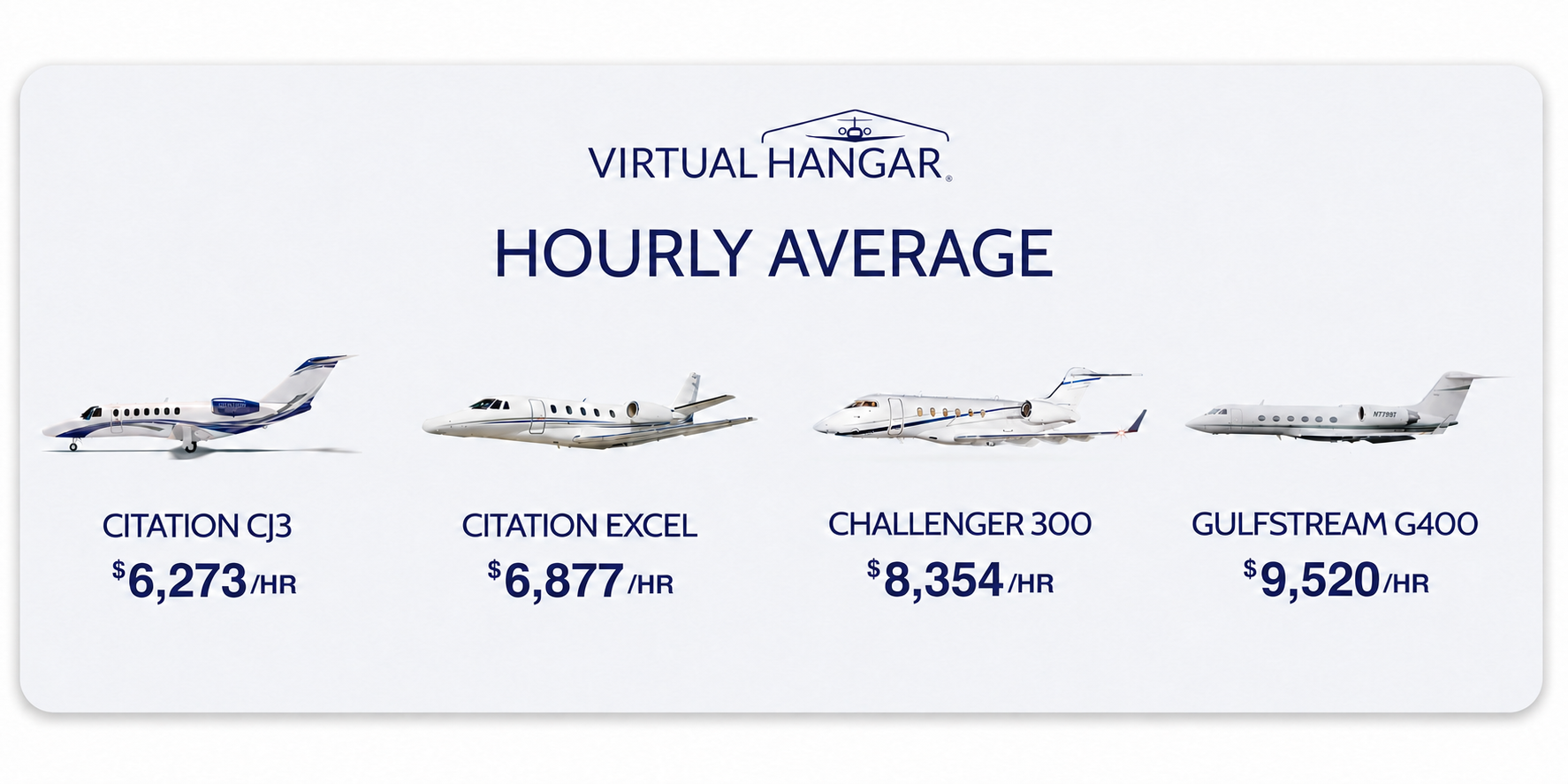
For July, Virtual Hangar®’s historical hourly averages ranged from $6,273 per hour for light jets to $9,520 per hour for heavy jets. Between those categories, mid-size and super mid-size aircraft offered different combinations of cabin space, range, baggage capacity and passenger comfort.
These figures should not be viewed as fixed charter prices. Instead, they help illustrate the general hourly cost associated with each aircraft category. The actual price of a private flight depends on the route, aircraft location, travel dates, airport selection, availability and any positioning required before or after the trip.
Understanding what each category offers can help travelers decide whether they need a smaller aircraft for a short regional flight or a larger jet for a longer trip with additional passengers and luggage.
Light Jet: $6,273 Per Hour
Light jets recorded a historical hourly average of $6,273 per hour in July.
This category is often well suited for shorter trips, regional travel and smaller passenger groups. Light jets can provide a comfortable private cabin while remaining more cost-conscious than larger aircraft categories.
They are commonly considered for trips that would otherwise involve a lengthy drive or an inconvenient commercial itinerary. A light jet can allow travelers to depart closer to home, use smaller regional airports and arrive closer to their final destination.
The category can be a practical fit for business travelers attending meetings in nearby cities, couples planning a weekend getaway or families traveling a relatively short distance. Depending on the aircraft, baggage space and cabin height may be more limited than on larger jets, so the number of passengers and amount of luggage should always be considered before booking.
Light jets are not simply the least expensive option. For the right route, they can also be the most efficient choice because the traveler is not paying for more cabin space or range than the trip requires.
Mid-Size Jet: $6,877 Per Hour
Mid-size jets averaged $6,877 per hour during July.
This aircraft category sits between light jets and super mid-size aircraft, offering travelers more cabin space and flexibility while maintaining an hourly average below that of larger long-range options.
Mid-size jets can be attractive for passengers who want a more spacious cabin, additional baggage room or greater range than a typical light jet provides. They may also offer features that become more important on longer trips, including improved cabin movement, enclosed lavatories and greater seating flexibility.
For business groups, families or travelers carrying golf clubs, skis and additional luggage, moving into a mid-size aircraft can make the trip more comfortable without requiring a heavy jet.
The relatively narrow difference between July’s light and mid-size averages also shows why travelers should compare available aircraft rather than selecting a category based only on its name. Depending on the route and the location of available aircraft, a mid-size jet may occasionally provide more value than expected.
Super Mid-Size Jet: $8,354 Per Hour
Super mid-size jets reached a historical hourly average of $8,354 per hour in July.
This category is popular among travelers who want the range and cabin comfort associated with a larger jet without immediately moving into the heavy-jet category. Super mid-size aircraft are often selected for longer domestic routes and certain international trips.
The cabins are generally designed to provide more room for passengers to work, relax and move comfortably during the flight. Many aircraft in this category can accommodate larger groups, additional baggage and longer nonstop missions.
For travelers crossing the country, the ability to fly nonstop can be especially valuable. Avoiding a fuel stop can reduce overall travel time and help simplify the itinerary, particularly when traveling with children, executives or a larger group.
Super mid-size jets may also provide upgraded cabin amenities, increased headroom and more substantial luggage capacity. These features can make the category particularly appealing for multi-day trips, golf travel, ski vacations and events that require formal clothing or additional equipment.
The hourly cost is higher than that of light and mid-size jets, but the added range and capacity may make a super mid-size aircraft the more practical choice for the entire mission.
Heavy Jet: $9,520 Per Hour
Heavy jets averaged $9,520 per hour in July, representing the highest historical hourly average among the four categories.
Heavy jets are generally designed for longer-distance travel, larger groups and passengers who place a greater emphasis on cabin space and onboard comfort. They can be considered for coast-to-coast trips, international travel and itineraries where nonstop capability is a major priority.
The category often includes aircraft with stand-up cabins, multiple seating areas, larger lavatories and more generous baggage capacity. Some configurations may also include sleeping arrangements, larger galleys and dedicated spaces for working or dining.
For a single passenger traveling a short distance, a heavy jet would usually provide more aircraft than the trip requires. For a group traveling across the country or overseas, however, the additional space and capability may support a more comfortable and efficient journey.
The value of a heavy jet is often found in what it allows travelers to avoid: connecting flights, fuel stops, limited baggage capacity and the challenge of dividing a group between multiple aircraft.
Why the Hourly Average Is Only Part of the Price
An hourly average is helpful, but private aviation is not priced by multiplying the published hourly figure by the estimated flight time alone.
The aircraft may need to reposition to the departure airport before picking up passengers. After completing the flight, it may also need to return to its home base or continue to another assignment. These movements can influence the final quote even though the passengers are not onboard for every segment.
Airport fees can also differ significantly. A major metropolitan airport may carry higher landing, handling and parking costs than a nearby regional airport. Choosing an alternative airport can sometimes improve convenience and create a more efficient overall trip.
Travel dates matter as well. Holiday weekends, major sporting events, seasonal travel patterns and high-demand routes can all affect aircraft availability. When demand is concentrated in one city or region, travelers may have fewer aircraft choices and higher positioning costs.
The age, model and cabin configuration of the aircraft also influence pricing. Two jets within the same category may offer different cabin sizes, ranges, baggage capacity and amenities.
Choosing the Right Aircraft for the Trip
The lowest hourly category is not automatically the best choice, and the largest aircraft is not always necessary.
The right selection depends on the full itinerary. Travelers should consider the number of passengers, flight distance, expected luggage, desired cabin experience and whether a fuel stop would be acceptable.
A light jet may be ideal for a short trip with two or three passengers. A mid-size jet may make more sense when additional luggage or cabin space is needed. A super mid-size aircraft can offer greater comfort and nonstop range for a cross-country itinerary, while a heavy jet may be the best fit for a larger group or long-distance international travel.
By reviewing multiple aircraft solutions, travelers can compare more than the hourly number. They can evaluate the total trip cost, aircraft location, cabin features and overall suitability for the mission.
Understanding July’s Private Aviation Pricing
July’s historical averages provide a useful snapshot of the private aviation market:
Light Jet: $6,273 per hour
Mid-Size Jet: $6,877 per hour
Super Mid-Size Jet: $8,354 per hour
Heavy Jet: $9,520 per hour
These figures give travelers a general understanding of how hourly pricing changes as aircraft size, range and cabin capability increase.
The final quote for any private flight will depend on the specific trip, but understanding the typical difference between aircraft categories can make it easier to evaluate available options. Through Virtual Hangar®, travelers can compare aircraft solutions based on their route, schedule and preferences rather than relying on a single estimated hourly figure.
About the Author
Keira Svensen is the Content & Editorial Director of Virtual Hangar Media, where she leads editorial strategy and storytelling across private aviation, aircraft markets, and emerging flight technologies. With a focus on data-driven reporting and modern aviation trends, Keira helps shape how owners, operators, and travelers understand the evolving private aviation landscape.
Published: July 29, 2025
About The Team: https://virtualhangarmedia.com/about/
Website: https://virtualhangar.com/news/
Relevant Articles