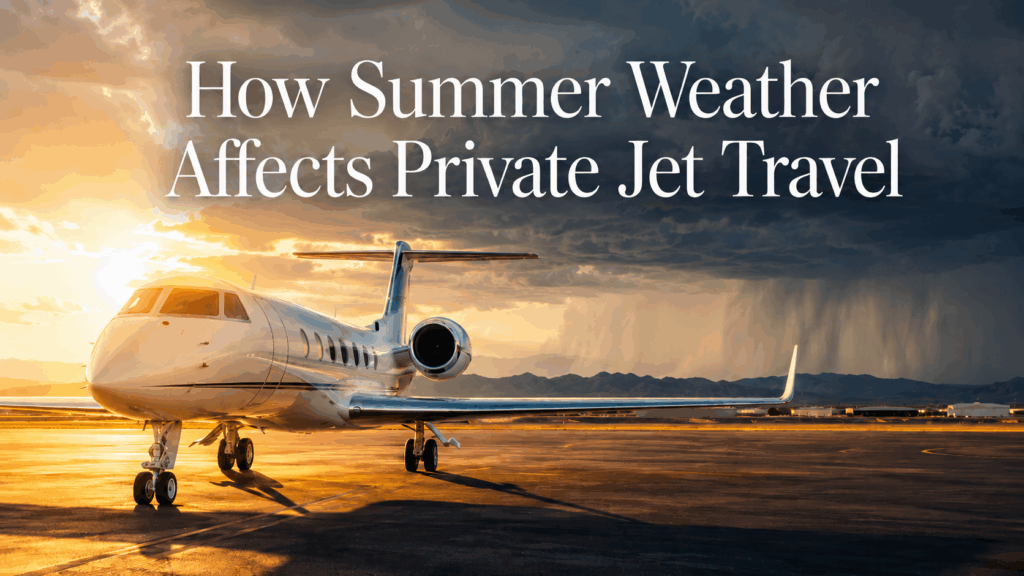
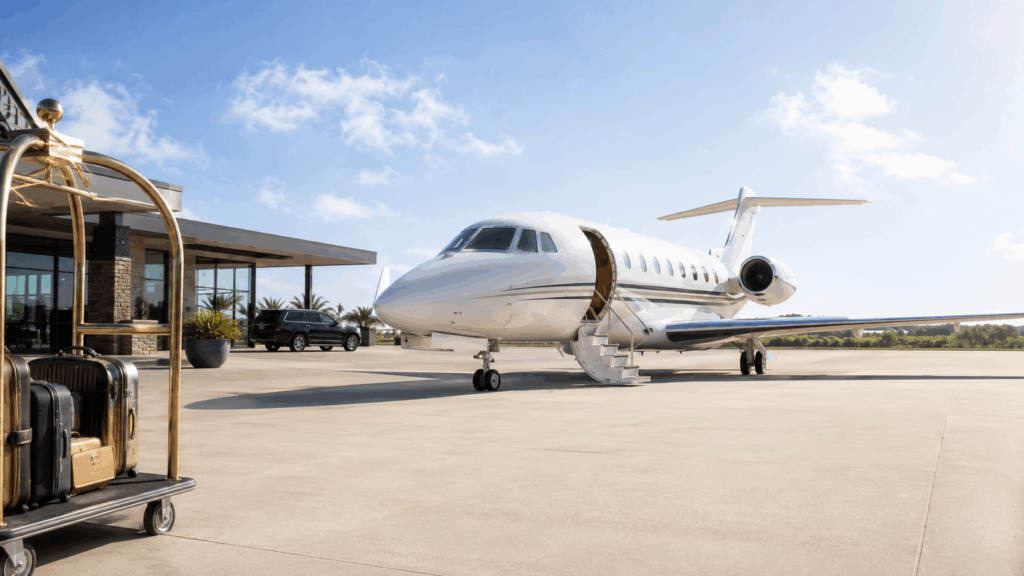
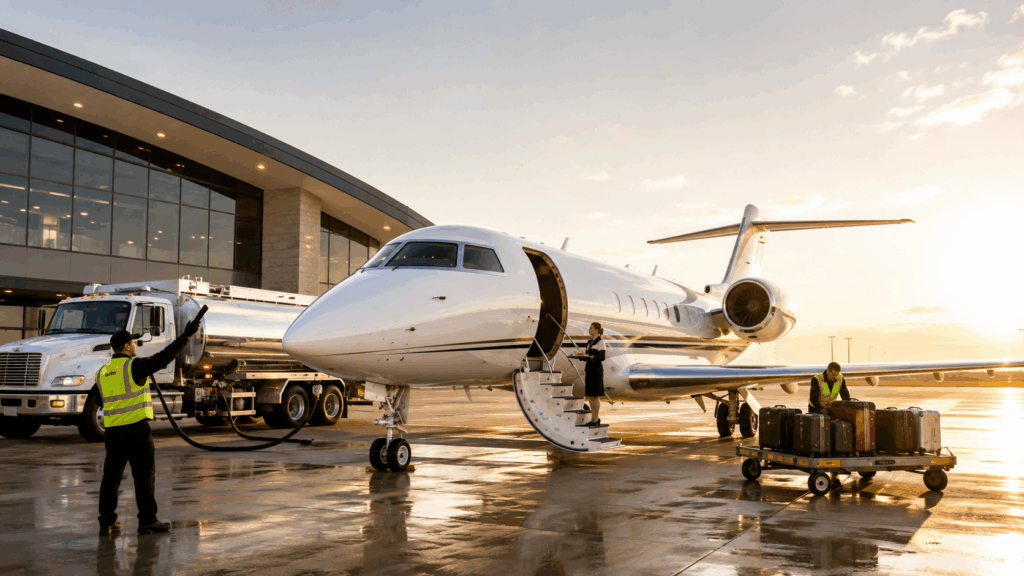
Summer is one of the busiest seasons for private aviation, bringing travelers to coastal destinations, major sporting events and weekend retreats across the country. However, high temperatures, afternoon thunderstorms and rapidly changing conditions can affect even the most carefully planned private flight.
Flying privately provides greater control over departure times, airports and aircraft selection, but it does not make a flight immune to weather. Understanding how summer conditions affect aviation can help travelers plan more confidently and avoid unnecessary surprises.
Extreme Heat Can Affect Aircraft Performance
On especially hot days, the air becomes less dense. This condition, commonly referred to as high density altitude, can reduce an aircraft’s takeoff and climb performance. The effect can become more noticeable at airports located at higher elevations or those with shorter runways.
Depending on the aircraft, airport, temperature and weight onboard, the flight crew may determine that the jet needs:
A longer runway
A lighter fuel load
Fewer passengers or less luggage
A short fuel stop
A cooler departure time
A different aircraft for the trip
These adjustments are not required for every flight. Each aircraft has its own performance capabilities, and every trip is evaluated based on the conditions expected at departure and arrival.
Afternoon Thunderstorms Can Change a Flight Quickly
Summer thunderstorms can develop rapidly, particularly during the afternoon when daytime heating is at its strongest. These storms can bring heavy rain, lightning, hail, turbulence and sudden changes in wind speed or direction.
Pilots do not simply fly through strong thunderstorms. Instead, they may need to travel around them, wait for the weather to move away from an airport or use an alternate route.
This means a flight can be affected even when the weather appears clear at the departure airport. A storm along the planned route or near the destination may still result in a longer flight, a delayed departure or an adjusted arrival time.
Morning Flights May Offer an Advantage
For summer travel, an earlier departure can sometimes reduce the likelihood of encountering heat-related performance limitations or afternoon thunderstorms.
The FAA notes that summer storms commonly form during the middle and later parts of the afternoon, although weather can develop at any time. Earlier flights may depart before the day’s peak temperatures and strongest storm activity begin.
Morning departures are not guaranteed to be weather-free, but they can provide additional flexibility—especially when traveling through regions known for frequent summer storms.
Turbulence Is Not Always Visible
Turbulence can be caused by thunderstorms, weather fronts, atmospheric pressure changes, mountainous terrain and other conditions. It can also occur when the sky appears completely clear.
Private aircraft can often adjust altitude or routing to seek smoother conditions, but turbulence cannot always be avoided entirely. Passengers should keep their seat belts fastened whenever seated, even when the flight feels smooth.
In many cases, turbulence is uncomfortable rather than dangerous. Flight crews use weather forecasts, pilot reports and onboard technology to identify potentially rough areas and make appropriate adjustments.
Heavy Rain Can Affect Airport Operations
Heavy rainfall may reduce visibility and temporarily slow arrivals or departures. Wet runway conditions can also influence the distance an aircraft needs to stop safely after landing. Pilots and flight planners review current runway conditions before determining whether an airport remains suitable for the flight.
Smaller private airports can be especially sensitive to severe weather because they may have shorter runways, fewer instrument approaches or more limited ground services than major commercial airports.
When necessary, a nearby alternate airport may offer better weather, a longer runway or more suitable operating conditions.
Why Private Aviation Still Provides More Flexibility
Summer weather affects every form of aviation, but flying privately gives travelers more options when plans need to change.
A private flight may be able to:
Depart earlier to avoid developing storms
Move the trip by a few hours
Use a nearby alternate airport
Select an aircraft better suited to the conditions
Adjust the route around severe weather
Avoid crowded commercial terminals during widespread delays
This flexibility can make a significant difference during the busiest and most unpredictable weeks of summer.
Through Virtual Hangar®, travelers can compare aircraft options and work with an experienced flight team to evaluate alternate airports, departure windows and routing solutions. While weather will always remain an important part of aviation, having more choices can help keep summer travel as efficient and comfortable as possible.
About the Author
Keira Svensen is the Content & Editorial Director of Virtual Hangar Media, where she leads editorial strategy and storytelling across private aviation, aircraft markets, and emerging flight technologies. With a focus on data-driven reporting and modern aviation trends, Keira helps shape how owners, operators, and travelers understand the evolving private aviation landscape.