Private Jet De-Icing Costs: What Travelers Should Expect This Winter
Updated
at
By
admin
| 12 min read
Introduction
As winter weather takes hold across major U.S. and international airports, private jet travelers face a seasonal operational reality: aircraft de-icing. Whether traveling for business, family holidays, or high-demand winter events, understanding how de-icing works—and what it costs—helps flyers make smarter, more efficient travel decisions.
At Virtual Hangar®, our AI-driven flight-matching platform continuously evaluates weather, aircraft readiness, and cost-impact factors to keep members informed and protected from unexpected winter delays or charges. Here’s what travelers should know.
What Is Aircraft De-Icing and Why Is It Required?
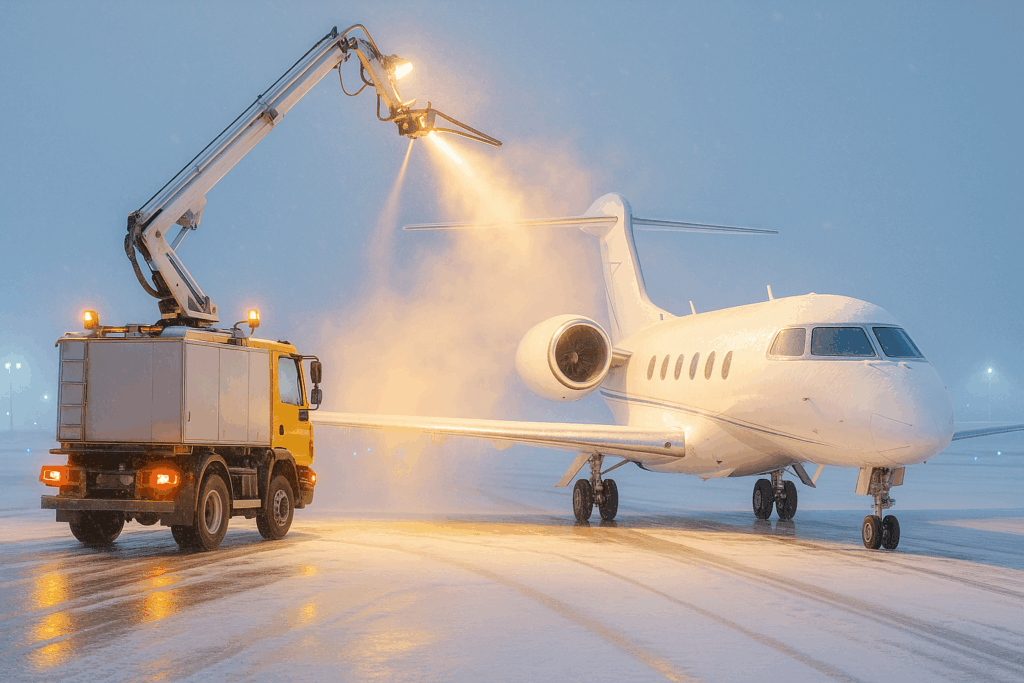
Ice, frost, or freezing precipitation on a jet’s wings or control surfaces can significantly reduce lift and disrupt airflow. FAA regulations require all aircraft to be completely clear of contamination before departure.
De-icing removes existing ice using heated glycol-based fluid, while anti-icing protects the aircraft from refreezing as it waits to depart. Depending on conditions, an aircraft may require one or both treatments.
Typical Cost Range for Private Jet De-Icing
De-icing is billed based on aircraft size, amount of fluid used, and airport-specific handling fees. Costs can vary sharply depending on weather severity.
Below are typical ranges seen across the U.S. and Canada:
Light Jets (Phenom 300, Citation CJ Series)
$1,200 – $3,000 per event Light jets require less glycol and typically shorter spray times.
$3,000 – $8,000 per event Costs increase with surface area, fluid volume, and dwell time.
Heavy & Long-Range Jets (Gulfstream, Global, Falcon 7X/8X)
$8,000 – $20,000+ per event Severe storms or freezing rain can push some heavy jet bills past $25,000–$30,000, especially at major hubs with high glycol recovery fees.
Why De-Icing Costs Vary So Widely
Several factors impact pricing from airport to airport:
1. Amount of Precipitation
Light frost removal is inexpensive. Freezing rain, wet snow, and multi-hour storms require significantly more fluid and labor.
2. Airport Environmental Fees
Many airports charge additional fees for glycol recycling, stormwater management, and specialized equipment.
3. Aircraft Size & Surface Area
A large-cabin Gulfstream may require four to six times the fluid of a light jet.
4. Timing and Delays
If an aircraft is delayed after de-icing, it may lose its holdover time—and need to be de-iced again, doubling costs.
5. Hangar Availability
Some operators hangar aircraft overnight to avoid morning frost—often a cost-saving strategy.
How Virtual Hangar® Helps Members Reduce De-Icing Costs
Our AI-powered platform constantly tracks weather patterns, flight schedules, operator readiness, and aircraft positioning to minimize winter disruptions.
Members benefit through:
Smart aircraft matching: pairing you with aircraft already hangared or positioned away from storms.
Predictive weather analytics: forecasting airports likely to require de-icing.
Push alerts & readiness notifications: letting you know when storms may impact departure timelines.
With thousands of aircraft matches available instantly—many positioned in warmer climates—Virtual Hangar® gives members more flexibility to bypass weather-heavy departures altogether.
Tips for Travelers During Winter Operations
To keep your travel smooth and predictable:
Book aircraft positioned in hangars when possible
Avoid peak storm windows (early morning after freezing nights)
Choose airports with efficient de-icing operations
Factor de-icing into trip estimates during winter months
Use Virtual Hangar® AI-matching to locate aircraft with minimal weather exposure
These strategies can reduce both costs and delays, especially on high-demand winter routes.
Final Thoughts
De-icing is an essential part of safe winter aviation, but it doesn’t need to be unpredictable. With costs ranging from $1,200 to over $20,000, understanding the factors that affect pricing—and using optimized aircraft matching—can save travelers time, money, and stress.
Virtual Hangar® continues to lead the industry with intelligent winter-readiness tools, helping members fly efficiently, safely, and confidently all season long.
About the Author
Keira Svensen is the Content & Editorial Director of Virtual Hangar Media, where she leads editorial strategy and storytelling across private aviation, aircraft markets, and emerging flight technologies. With a focus on data-driven reporting and modern aviation trends, Keira helps shape how owners, operators, and travelers understand the evolving private aviation landscape.