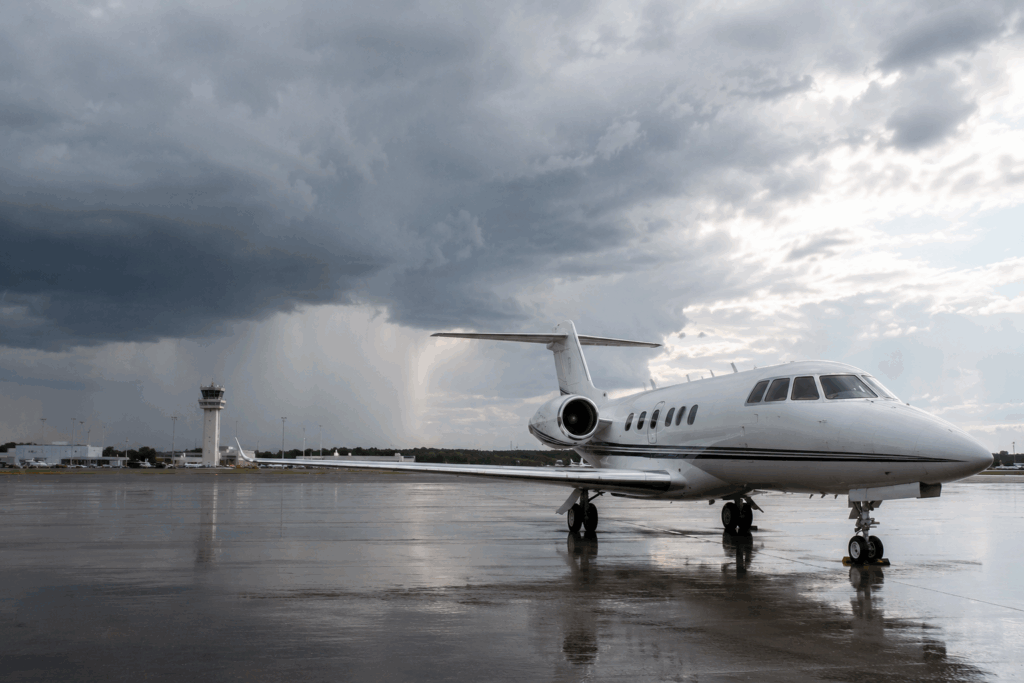
Weather has always played a major role in aviation, but in private aviation, changing weather patterns can dramatically reshape travel demand almost overnight.
From hurricanes and winter storms to seasonal migration trends and heat waves, certain weather events consistently trigger major increases in private jet activity across specific regions of the country.
As private aviation becomes increasingly data-driven, operators and travelers alike are paying closer attention to how weather directly impacts aircraft demand, pricing, availability, and routing.
Storm Systems Often Trigger Immediate Demand Surges
One of the largest spikes in private aviation demand typically occurs ahead of major storms.
When hurricanes, tropical storms, blizzards, or severe weather systems begin approaching populated regions, travelers often turn to private aviation for:
Faster departures
Flexible scheduling
Access to smaller airports
Reduced airline disruption risk
Last-minute evacuation capability
Unlike commercial airlines that operate on rigid schedules, private aviation allows travelers to depart quickly and adjust routes in real time as weather conditions evolve.
Ahead of major storms, private jet activity frequently surges in:
South Florida
The Gulf Coast
The Northeast
Mountain ski destinations
Caribbean islands
In some cases, aircraft availability tightens significantly within hours of major weather alerts being issued.
Snowbird Travel Creates Seasonal Demand Waves
One of the most predictable weather-related travel patterns in private aviation is the annual “snowbird” migration.
During colder months, travelers relocate from the Northeast, Midwest, and Canada toward warmer destinations such as:
Florida
Arizona
Southern California
The Caribbean
Then, as temperatures warm again heading into late spring and summer, demand reverses northbound.
This seasonal movement creates major directional demand imbalances throughout the charter market, often influencing:
Aircraft positioning
Empty leg availability
Hourly charter pricing
Operator scheduling
Florida, in particular, becomes one of the busiest private aviation hubs during these seasonal shifts.
Winter weather remains one of the biggest operational challenges for commercial airlines.
Major snowstorms and ice events frequently lead to:
Airline cancellations
Long delays
Missed connections
Airport congestion
Crew disruptions
Because of this, many travelers increasingly turn to private aviation during winter travel periods to maintain schedule reliability.
Private aircraft also have the advantage of operating into smaller regional airports that may recover operationally faster than major airline hubs during severe winter weather events.
Business travelers especially rely on private aviation during these periods to avoid losing critical meetings, events, or travel windows.
Extreme Heat Can Also Impact Flight Activity
While winter storms receive significant attention, summer heat waves also affect aviation operations.
High temperatures can influence:
Aircraft performance
Runway requirements
Departure timing
Payload capabilities
Airport congestion
In extremely hot environments such as:
Las Vegas
Phoenix
Scottsdale
Texas
Southern Nevada
operators often adjust flight schedules toward cooler morning or evening departure windows.
At the same time, rising temperatures drive increased leisure demand toward coastal destinations, mountain retreats, and island markets.
Weather Creates Opportunities for Smarter Aircraft Matching
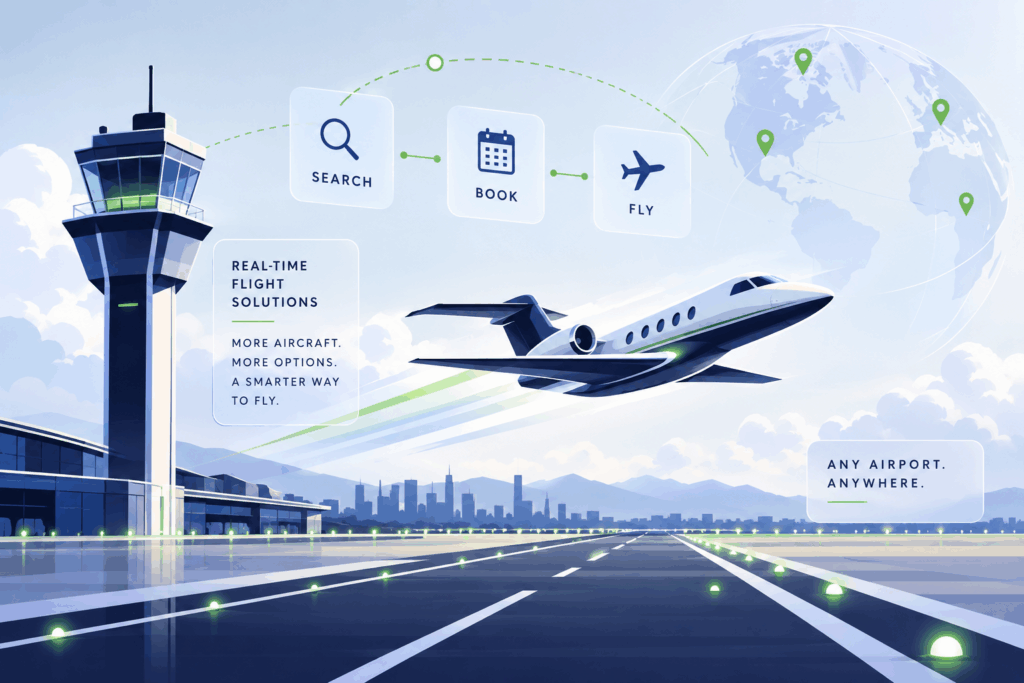
As weather impacts travel patterns, technology-driven booking systems are becoming increasingly important across private aviation.
Modern platforms can now identify:
Nearby repositioning aircraft
Empty-leg opportunities
Changing regional demand
Weather-driven route shifts
Airport congestion patterns
This helps operators improve efficiency while helping travelers secure aircraft faster during periods of heightened demand.
Real-time weather tracking combined with live aircraft availability data is becoming one of the most valuable tools in modern private aviation operations.
Weather Will Continue Driving Aviation Trends
As travel demand grows and climate patterns continue evolving, weather-related demand spikes are becoming an increasingly important part of private aviation planning.
Operators, brokers, and technology platforms are all adapting by focusing more heavily on:
Predictive demand analysis
Real-time aircraft positioning
Faster scheduling flexibility
Dynamic routing
Seasonal demand forecasting
For travelers, private aviation continues offering one of the most flexible solutions during periods of weather uncertainty—especially when speed, reliability, and schedule control matter most.
About the Author
Keira Svensen is the Content & Editorial Director of Virtual Hangar Media, where she leads editorial strategy and storytelling across private aviation, aircraft markets, and emerging flight technologies. With a focus on data-driven reporting and modern aviation trends, Keira helps shape how owners, operators, and travelers understand the evolving private aviation landscape.