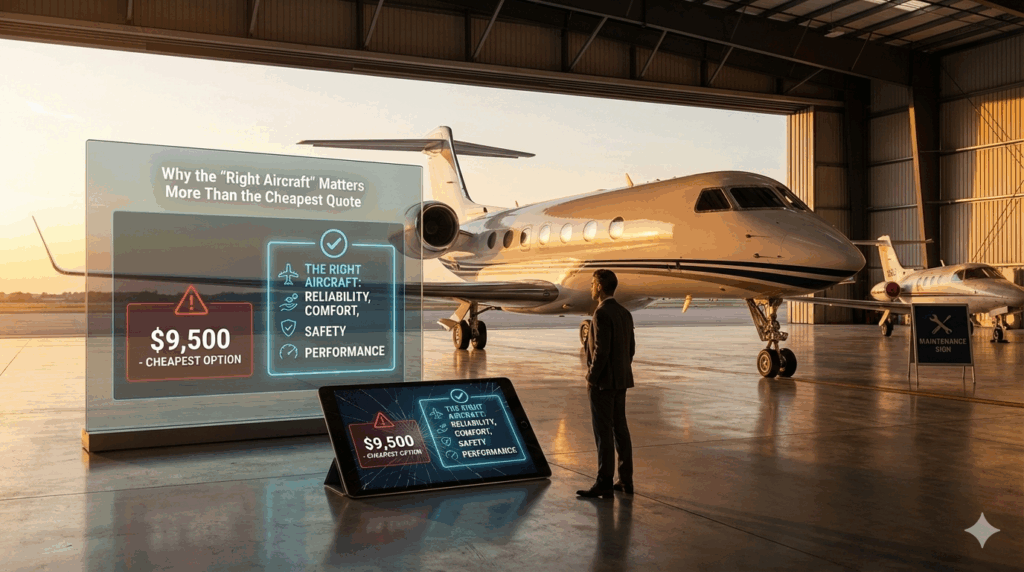
Why the “Right Aircraft” Matters More Than the Cheapest Quote
- Updated
- at
- By admin
- | 12 min read
Introduction
In private aviation, price is often the first number people see—and sometimes the only one they focus on. A lower quote can feel like a win. But unlike commercial air travel, private aviation is not a standardized product. Every flight is a custom operation, and the aircraft you choose plays a defining role in how safe, comfortable, reliable, and successful that trip will be.
The reality is simple: the cheapest aircraft is rarely the best aircraft for the mission. And in many cases, chasing the lowest number introduces hidden risks and trade-offs that undermine the very reasons travelers choose to fly privately in the first place.
Private Aviation Is Mission-Specific, Not Interchangeable
No two private flights are identical. Variables such as route length, passenger count, baggage volume, runway constraints, weather patterns, and even time of day all influence which aircraft is truly appropriate. An aircraft that looks acceptable on paper may struggle operationally once real-world conditions are applied.
For example, an aircraft priced aggressively may be operating at the edge of its range, requiring fuel stops that extend travel time and increase exposure to delays. Another may lack the runway performance needed for certain airports, forcing inconvenient alternatives. The right aircraft is selected with margin—margin that protects the schedule and keeps the trip smooth even when conditions shift.
Performance Matters Long Before Takeoff
Aircraft performance characteristics are not abstract specifications—they directly impact the travel experience. Climb rate, cruise speed, altitude capability, and range all affect how efficiently a flight is completed.
Lower-cost aircraft are often older models or smaller platforms that may cruise at lower altitudes, exposing passengers to turbulence and weather systems that more capable aircraft can simply fly above. Over longer distances, these differences add up, influencing arrival time, comfort, and fatigue.
Choosing the right aircraft means choosing performance that aligns with the mission—not just the minimum required to complete it.
Maintenance Quality Is Invisible Until It Isn’t
Maintenance standards vary widely across the private aviation market. While all charter aircraft must meet regulatory requirements, how operators approach preventative maintenance, component replacement, and operational readiness can differ significantly.
Aircraft offered at unusually low pricing may be flying closer to maintenance limits, increasing the likelihood of last-minute issues, substitutions, or delays. These disruptions are rarely reflected in the original quote—but they are felt immediately when a flight plan changes hours before departure.
The right aircraft is supported by disciplined maintenance practices and operators who prioritize reliability over aggressive pricing.
Crew Experience Is Part of the Aircraft Equation
An aircraft is only as good as the crew operating it. Crew familiarity with a specific aircraft type, route, and operating environment plays a critical role in safety and efficiency.
Lower-cost options may rely on less experienced crews, tighter duty windows, or unfamiliar routing. While these details don’t appear on a pricing summary, they influence decision-making in the cockpit—especially when weather, air traffic congestion, or mechanical considerations arise.
Selecting the right aircraft means selecting a flight team with experience, stability, and operational depth.
Comfort Isn’t a Luxury—It’s a Performance Factor
Private aviation is often chosen to maximize productivity. Cabin height, seat configuration, noise levels, pressurization, and onboard amenities all affect how passengers feel during and after the flight.
A cheaper aircraft may technically meet passenger capacity requirements but offer limited space, higher cabin noise, or fatigue-inducing pressurization profiles. Over longer flights, these differences become significant, particularly for business travelers stepping directly into meetings or events.
The right aircraft allows passengers to arrive rested, focused, and ready—protecting both time and performance.
Reliability Protects What Matters Most: Time
Time is the most valuable currency in private aviation. Delays, aircraft swaps, or last-minute operational changes quickly erode the value of any cost savings.
Cheapest-quote aircraft are often more vulnerable to disruption during peak travel periods, weather events, or high-demand seasons. When backup aircraft are unavailable or crews are out of position, the entire itinerary can unravel.
The right aircraft is chosen with redundancy and reliability in mind—ensuring that the flight happens as planned, not just as priced.
The Hidden Costs of the Lowest Price
What appears cheaper upfront can become more expensive over the course of a trip. Additional fuel stops, extended flight time, repositioning costs, catering limitations, or operational delays all carry real consequences.
More importantly, these hidden costs often show up when flexibility is least available—on the day of travel, when schedules are tight and alternatives are limited.
True value in private aviation is not about minimizing price. It’s about minimizing risk.
About the Author
Keira Svensen is the Content & Editorial Director of Virtual Hangar Media, where she leads editorial strategy and storytelling across private aviation, aircraft markets, and emerging flight technologies. With a focus on data-driven reporting and modern aviation trends, Keira helps shape how owners, operators, and travelers understand the evolving private aviation landscape.
About The Team: https://virtualhangarmedia.com/about/
Website: https://virtualhangar.com/news/
Relevant Articles