Challenger 600
Heavy Jet by Bombardier


General Specifications
Heavy Jet
Jet Size Category
11
Passengers
41250 lbs
Max Payload
3347 mi
Range
458 mph
Max Speed
442 mph
Cruising Speed
5700 ft
Takeoff Distance
3050 ft
Landing Distance
Cabin Dimensions: 1407 ft³
Cabin Length

28.33 ft
Cabin Width

8.17 ft
Cabin Height

6.08 ft
Cargo Capacity: 115 ft³
Personal Items
Carry Ons
Checked Bags
More About Challenger 600
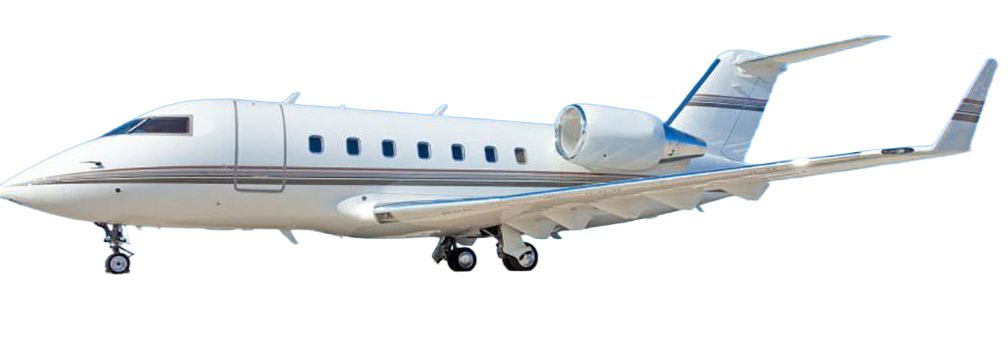
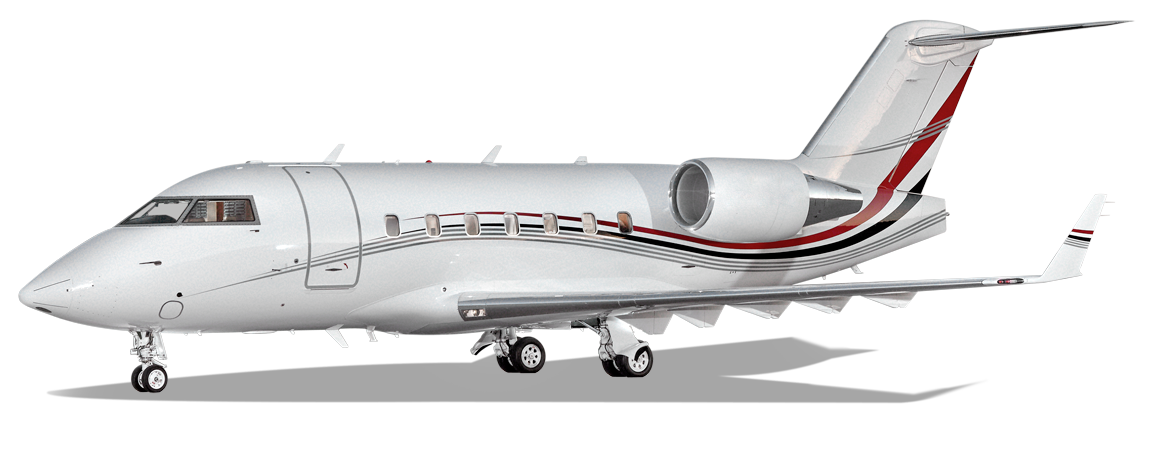
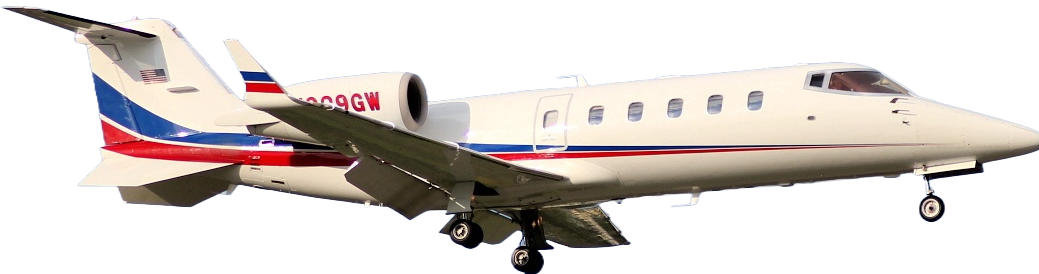
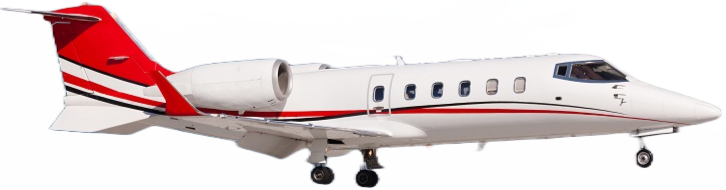
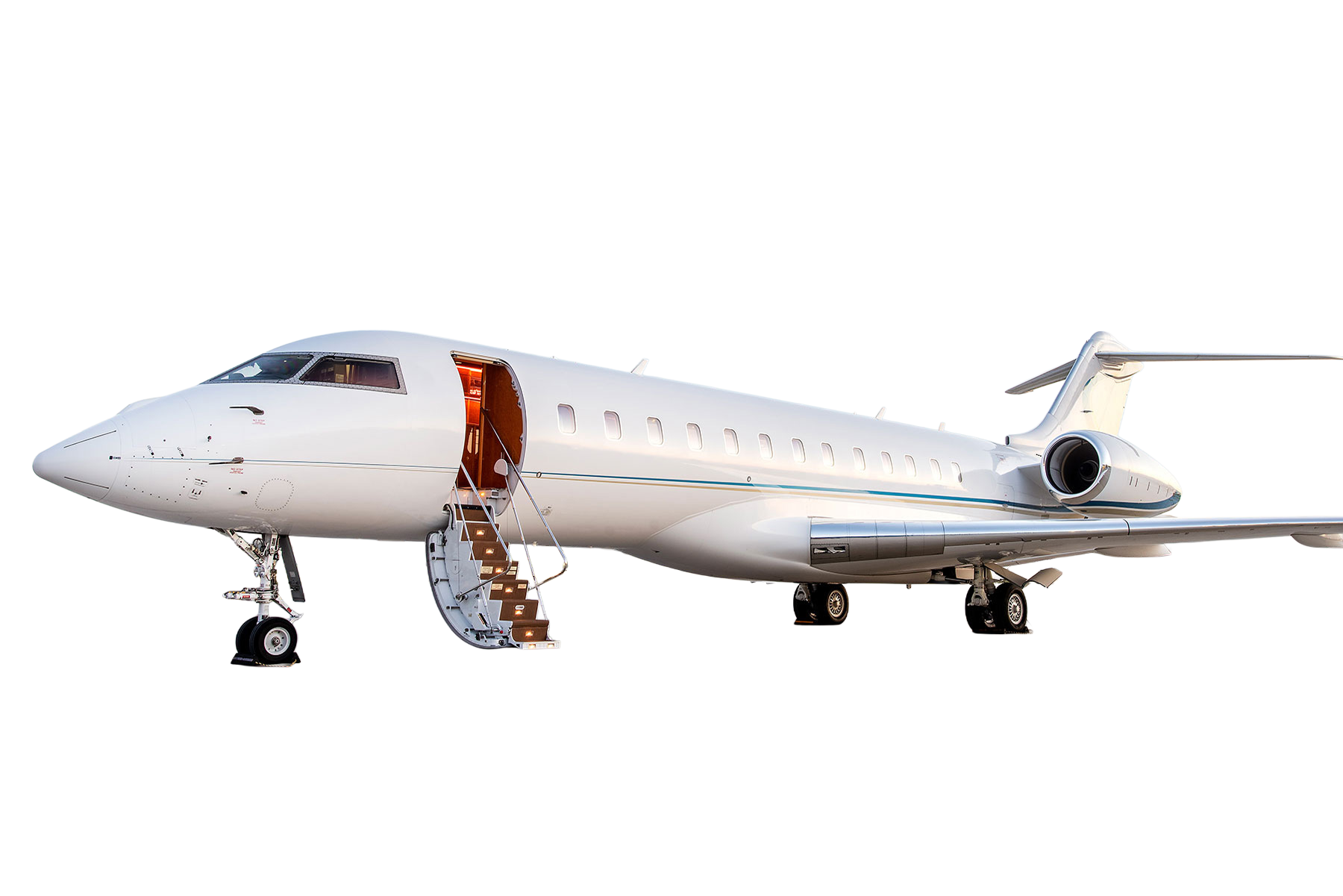
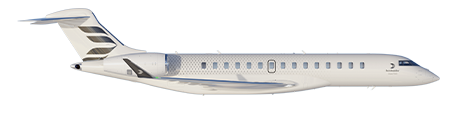
The Challenger 600 stands out in the world of private aviation, boasting a cabin that rivals that of commercial airliners. In a league akin to the Boeing 737, this remarkable aircraft offers an expansive cabin space unparalleled by its peers. It’s a testament to comfort, efficiency, and performance, capturing the hearts of both pilots and passengers with its transcontinental range and luxurious interiors.
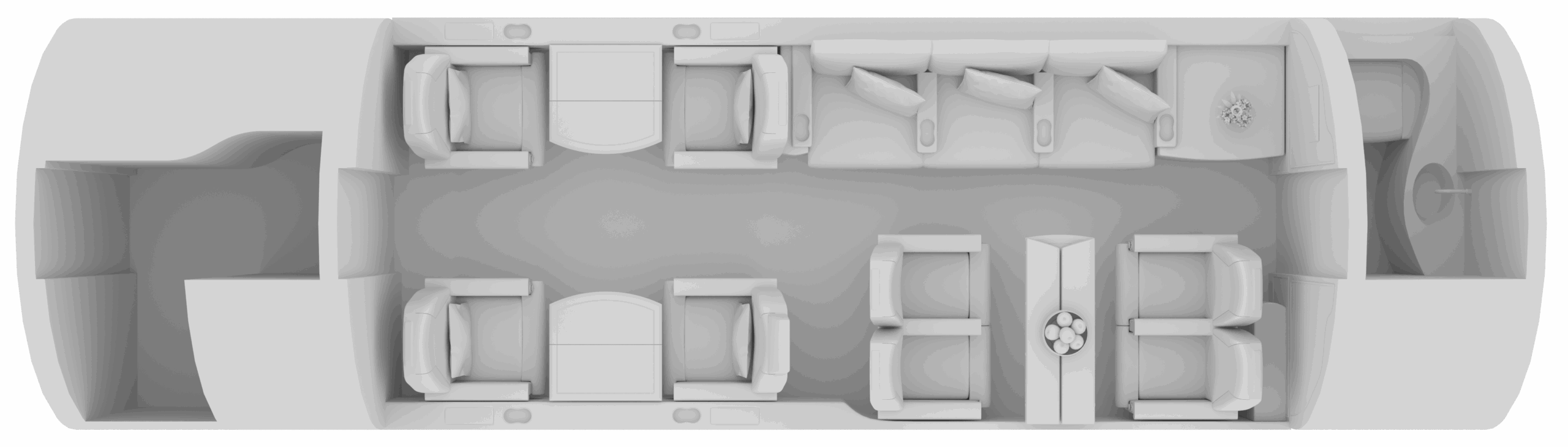
The cabin dimensions are impressive, with a generous width of 8.2 feet and a height of 6.1 feet. Typically accommodating between nine to twelve passengers, it can be configured to welcome as many as nineteen individuals, making it a truly spacious private jet. Beyond its size, the cabin is celebrated for its tranquility, boasting low noise and vibration levels, creating a serene in-flight atmosphere. Additionally, there’s ample storage space with 115 cubic feet available in an internal compartment, ensuring you can bring everything you need.
Powering the Challenger 600 are two Avco Lycoming ALF502L engines, modified to include supercharger stages in the low-pressure compressor, delivering over 7,500 pounds of thrust during takeoff. Impressively, it requires just 5,700 feet of runway at sea level or 7,350 feet at 5,000 feet altitude with a temperature of 77°F for takeoff. With this prowess, it can traverse the entire United States nonstop, except when contending with the strongest headwinds. The Challenger 600 achieves a top cruise speed of 443 knots at an altitude of 39,000 feet, well above most air traffic, or cruises at 425 knots at 43,000 feet for long-range journeys. Fuel consumption is moderate, burning 1,710 pounds of fuel per hour at its long-range cruise performance levels or 1,910 pounds per hour at maximum speed, averaging 262 gallons of fuel per hour.
Reliability is key, and the Challenger 600 boasts four backup power systems. Its primary system, the 115-VAC 400-Hz electrical system, provides ample power and voltage compared to the DC power systems typically found in business jets. An AC alternator serves as the first backup, while an AlliedSignal GTCP 36-100E APU, along with another AC generator and air-driven generator (ADG), constitute the second and third backup systems. These systems power critical functions such as hydraulic pumps, wing flaps, landing lights, and various anti-ice systems, with bleed air used for engine starts and environmental controls.
The cockpit is equipped with a Sperry SPZ-650 analog flight guidance system, featuring a Primus 400 weather radar, dual-channel SPZ-650 autopilot, a GNS-500 VLF/Omega navigation system, and a range of situational awareness systems.
In essence, the Challenger 600 combines the capabilities of an airline jet with the cost-effectiveness of a private aircraft. Its cabin space sets new standards within its class, and it continues to operate economically. In sum, it offers the versatility and comfort of commercial travel in a private jet package.
Similar Aircraft


.png)